 FirstWeeks
The first smile is a conversation
Medically-informed · Sources: CDC · Updated June 2026 · 3 min read
Gas no more
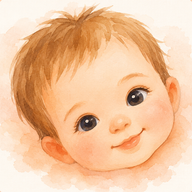
Around six to eight weeks, the smile changes category: it starts happening in response to you — your face, your voice, your ridiculous sound effects. That's the social smile, one of the earliest milestones on the CDC's two-month list, and the first time communication flows both directions on purpose.
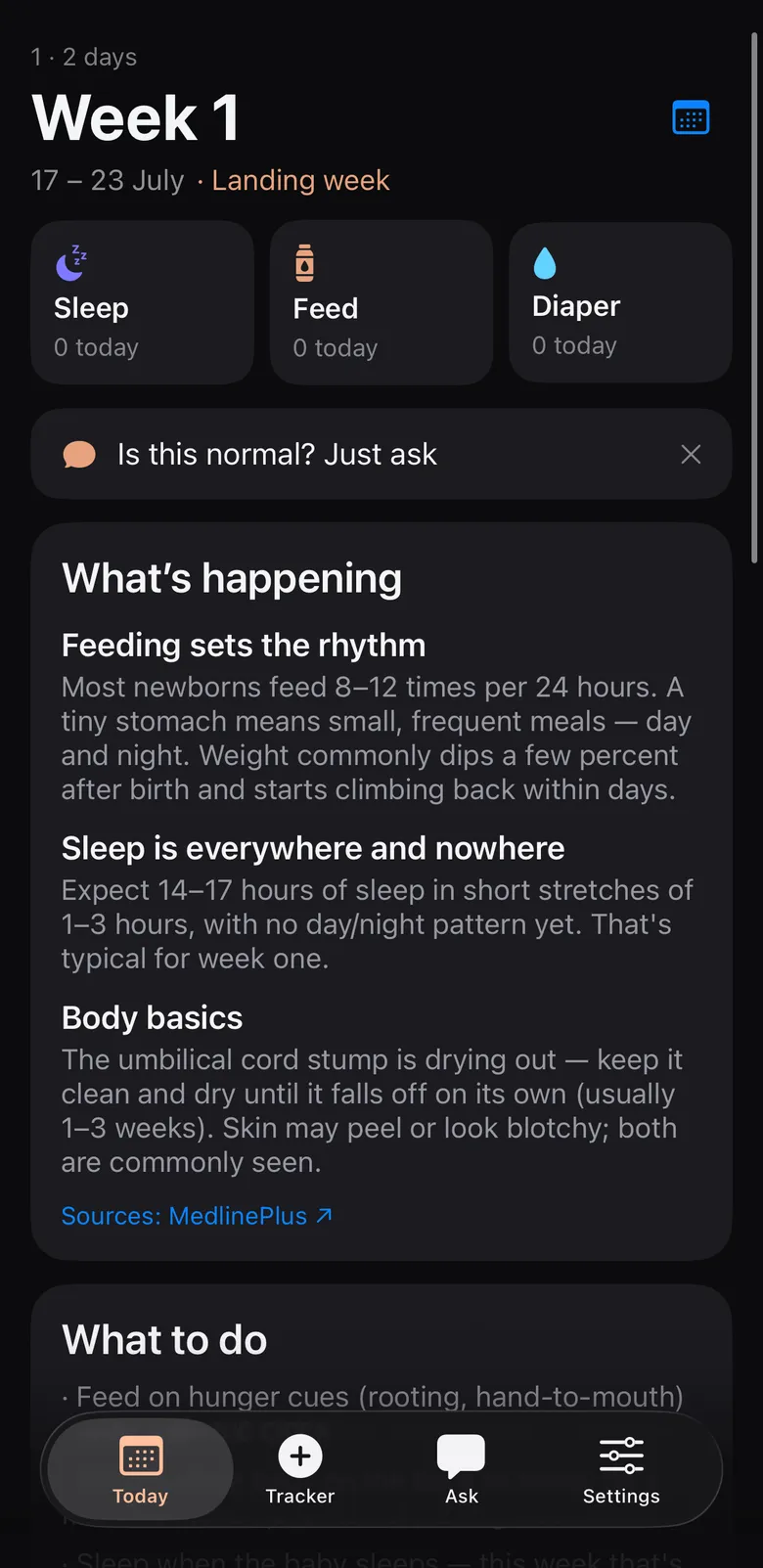
Ask FirstWeeks anything about your babyServe and return
Development at this age runs on a simple loop researchers call serve-and-return: baby serves (a look, a coo, a smile), you return (eye contact, words, a smile back), repeat. Every loop is a rep for the social brain. You don't need flashcards or apps — you are the enrichment program.
Is this normal for your baby?
FirstWeeks answers with your baby’s age and today’s log in mind — with pediatric sources attached.
Talk like a narrator
Narrate the day in that sing-song voice that comes naturally — it exists in every language and babies measurably prefer it. Pause after you speak, as if waiting for an answer. Long before words, your baby is learning the deepest rule of language: we take turns.
Face time, literal version
The 8-to-12-inch range where newborn vision is sharpest is exactly feeding distance — nature's design for face study. During calm awake windows, get close, make slow expressions, hold eye contact. Watching your baby watch you is the whole curriculum.
If the smile hasn't come
Milestone windows are wide. Some babies smile socially at five weeks, some at nine or ten. Worth mentioning at the two-month checkup: no social smiling, no calming to your voice, or no response to loud sounds. Mentioning is not diagnosing — it's how checkups are supposed to work.
Bank these weeks
The payoff era begins here: after weeks of one-way service, the customer starts tipping. Take the videos. Future you says thank you.
Less guessing tonight
Track the evening in one tap — then ask what it means.