 FirstWeeks
Coos, squeals and the language project
Medically-informed · Sources: CDC · Updated June 2026 · 3 min read
The sound lab opens
Somewhere around now the repertoire expands beyond crying: coos, gurgles, squeals, experimental volume tests. It sounds like noise; it's actually phase one of a language project that runs for years — and you're the co-researcher.
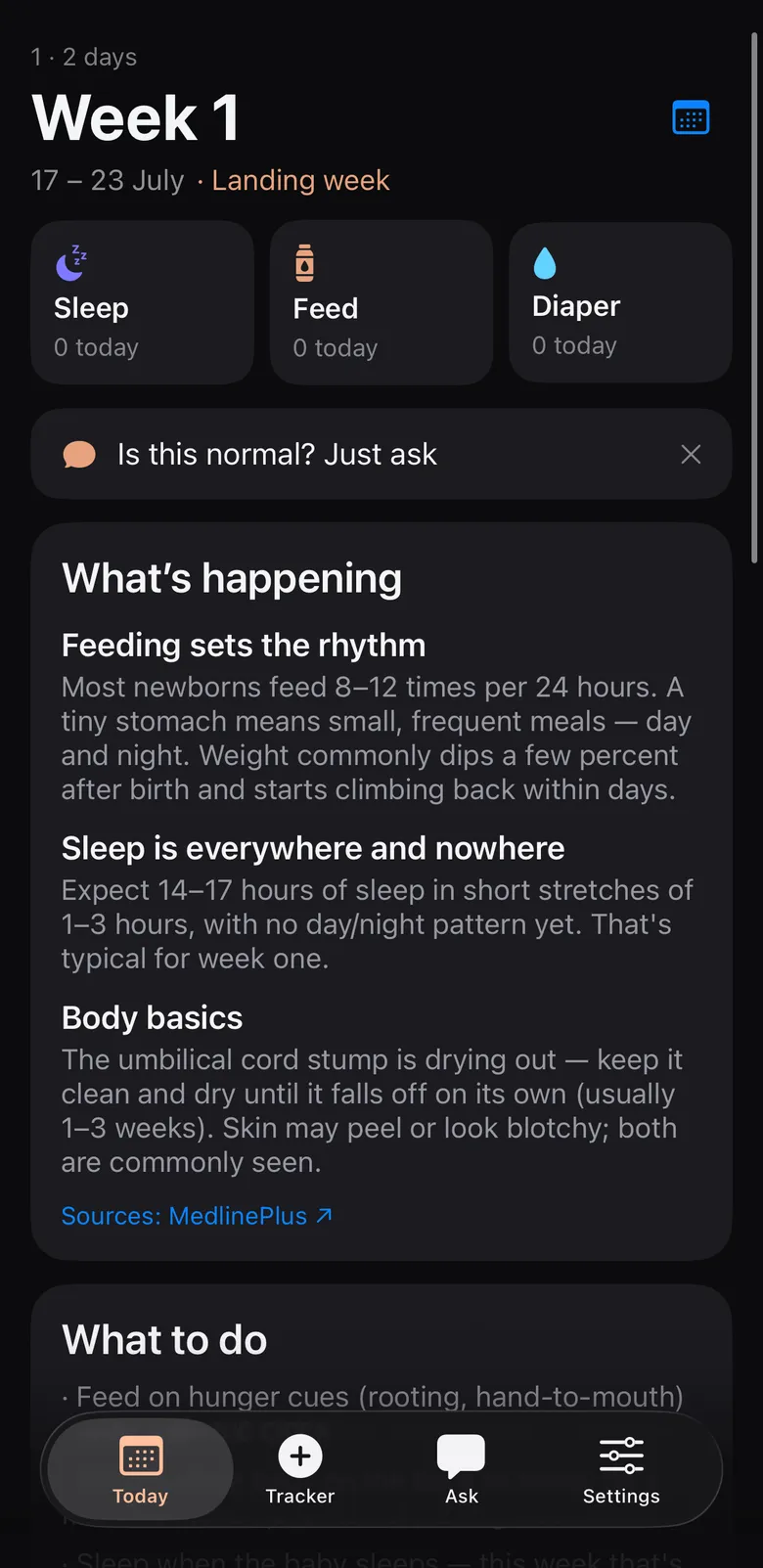
Ask FirstWeeks anything about your babyAnswer everything
When your baby coos and you coo back, then pause, then wait — that turn-taking loop is the deep structure of every conversation they'll ever have. Babies whose sounds get answered practice more. You're not being silly; you're running the drill.
Is this normal for your baby?
FirstWeeks answers with your baby’s age and today’s log in mind — with pediatric sources attached.
Narration counts as curriculum
'Now we're washing hands. Warm water! Now the towel.' Live commentary feels absurd and is exactly right: language grows from hearing real words attached to real moments, thousands of times. No product required — laundry narration is as good as any class.
Books before books make sense
Reading to a two-month-old isn't about plot. It's rhythm, your voice, page-turning ritual and high-contrast pictures. A board book at this age is a listening exercise — five minutes counts.
Two languages at home?
Speak both, each parent in whichever feels natural. Growing up around two languages is commonly seen worldwide and isn't confusing — the timeline of babble and first words stays broadly on track.
Worth mentioning
At the next visit, mention if your baby doesn't react to loud sounds, doesn't quiet to familiar voices, or makes no sounds beyond crying. Hearing gets screened at birth, but noticing at home is a real second layer.
Less guessing tonight
Track the evening in one tap — then ask what it means.