 FirstWeeks
Reading your baby like a dashboard
Medically-informed · Sources: MedlinePlus · Updated June 2026 · 3 min read
Cues beat clocks
By now your baby broadcasts three main states — hungry, tired, overstimulated — and each has tells that show up before the crying does. Catching cues at the whisper stage instead of the siren stage is the closest thing to a parenting superpower this month.
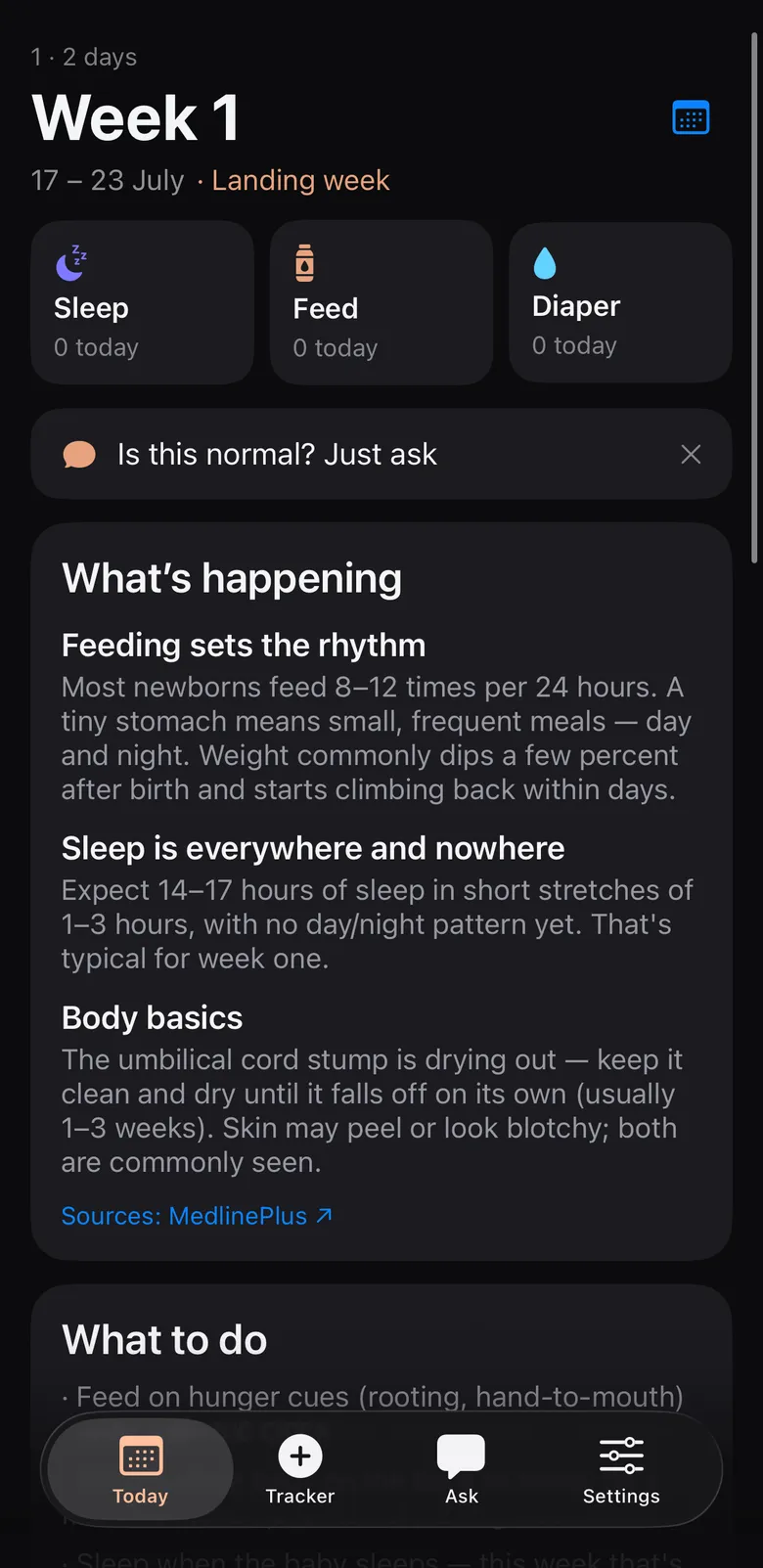
Ask FirstWeeks anything about your babyHunger, early edition
Rooting toward anything that touches the cheek, hands to mouth, lip smacking, restless head-turning at the chest. Crying is the last hunger cue, not the first — a calm latch beats a frantic one, so feeding at the early signs makes the whole meal easier.
Is this normal for your baby?
FirstWeeks answers with your baby’s age and today’s log in mind — with pediatric sources attached.
Tired tells
Glazed staring into the distance, losing interest in your face, jerky movements, ear or eye rubbing, a specific whiny pitch. The window between 'sleepy' and 'overtired' is short at this age — a drowsy baby goes down easy, an overtired one fights the very sleep they need.
Too-much-world signals
Turning the face away, arching, splaying fingers, hiccuping or sneezing during play — commonly seen signs of a full sensory tank. The response is subtraction: dimmer room, fewer faces, quiet hold. Looking away from you isn't rejection; it's self-regulation working.
Your logs are the decoder
Cues plus data beat either alone. If the log says ninety minutes awake and the whining starts — that's the tired cue confirmed. Two hours since the last feed plus fists in mouth — hunger. The tracker turns guessing into pattern-matching.
You'll misread some. Fine.
Offering food to a tired baby or a nap to a hungry one happens to everyone, daily. Babies are forgiving test audiences — adjust and go again.
Less guessing tonight
Track the evening in one tap — then ask what it means.