 FirstWeeks
Your baby at 5 weeks: peak fussy, almost
Medically-informed · Sources: CDC · Updated June 2026
For many babies this is the loudest stretch. You're not doing anything wrong — the curve just hasn't turned yet.
What’s happening
Crying near its top
Daily crying is close to its natural maximum for many babies around weeks 5–8. Soothing helps in the moment; time is what actually ends it.
Eyes lock on
Baby follows your face in a small arc and studies high-contrast patterns.
Sounds beyond crying
Little throaty noises and early cooing may show up in calm moments.
What to do
- Trade shifts with a partner during the evening peak
- Take crying breaks in another room when you need them — a safely placed crying baby is okay for a few minutes
- Track sleep to spot the day's calmest window and protect it for yourself
When to check in
Crying paired with fever 100.4°F+, vomiting (not spit-up), fewer wet diapers, or a bulging soft spot — call your pediatrician.
Skills to watch this week
- 5–9Watches you as you move — Eyes follow you across short distances around the room.
- 5–10Coos vowel sounds — 'Ooo' and 'aah' in calm, alert moments.
- 1–5Random arm & leg movements — Jerky, uncoordinated waving — the nervous system is wiring up.
- 1–5Calms when held — Settles against a warm chest — contact is regulation at this age.
- 1–5Cries to communicate — Different needs slowly acquire slightly different cries.
- 2–6Makes throaty little sounds — Grunts and sighs — the warm-up band before cooing.
Every baby has their own pace — ranges are typical, not deadlines.
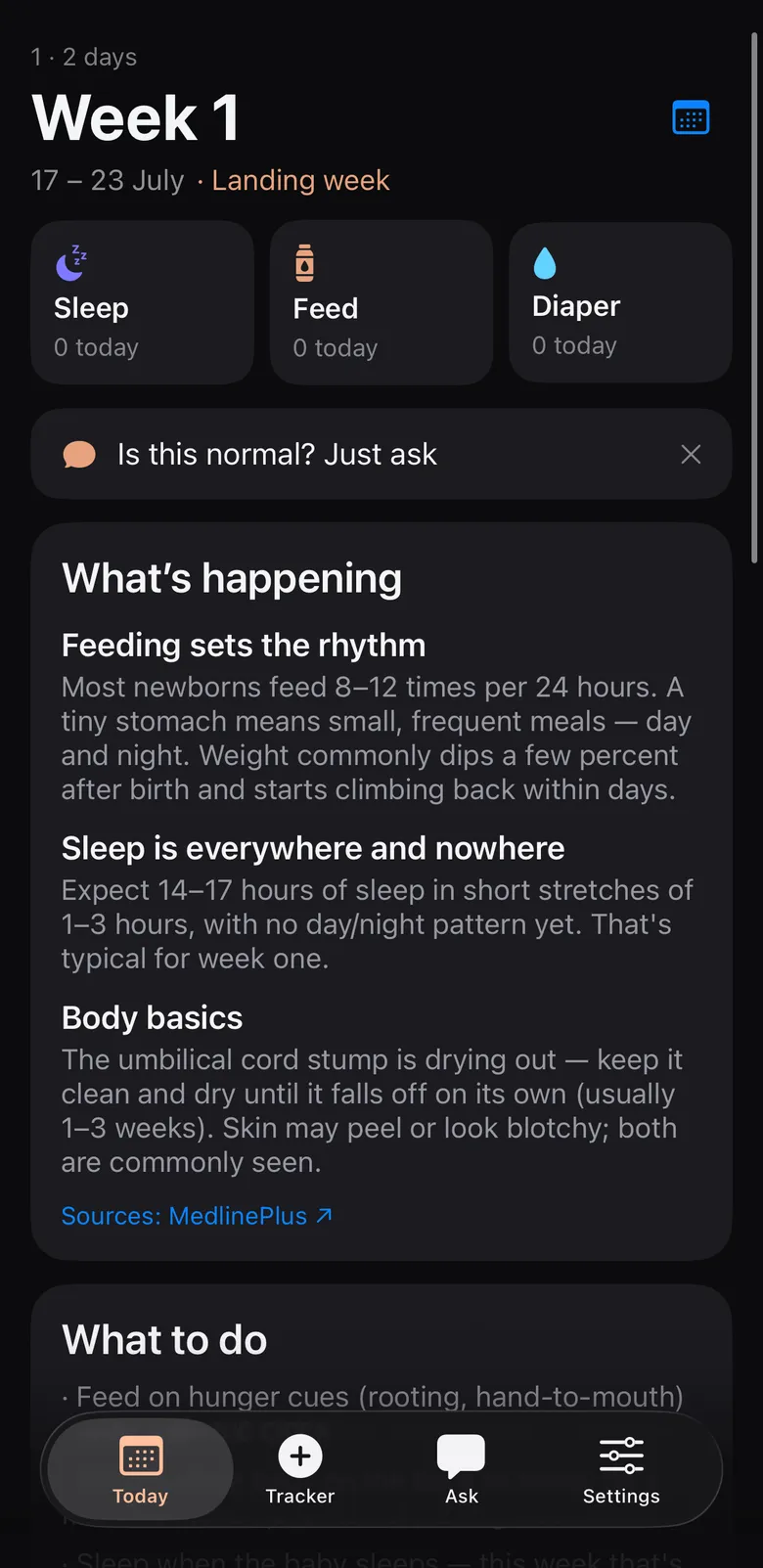
This is exactly what FirstWeeks shows you — matched to your baby
Week 5 guidance, skills to watch, and answers that know your baby’s age and log.