 FirstWeeks
Your baby at 7 weeks: brighter days
Medically-informed · Sources: CDC · Updated June 2026
Awake time gets genuinely interactive: more looking, more cooing, more of baby showing up as a person.
What’s happening
Cooing conversations
Vowel sounds ('ooo', 'aah') appear and baby may 'answer' when you pause — the first turn-taking.
Hands drift to mouth
Self-soothing via hands and fists is commonly seen and completely fine.
Crying starts easing
For many babies the crying curve begins its slow descent around now.
What to do
- Narrate your day out loud — it's language input, not silliness
- Offer a high-contrast toy to track side to side
- Start a simple, repeatable wind-down before night sleep
When to check in
Baby doesn't calm at all when held and fed, most days — worth a conversation with your pediatrician.
Skills to watch this week
- 7–12Turn-taking sounds — Coos, pauses when you talk, then 'answers' again.
- 4–8Social smile — Smiles back at your face and voice — the first true conversation.
- 5–9Watches you as you move — Eyes follow you across short distances around the room.
- 6–10Holds head up in tummy time — Steadier lifts, chin well off the mat.
- 6–10Smoother arm and leg motion — Newborn jerkiness gives way to flowing movement.
- 3–8Follows a face in a short arc — Tracks your slow movement from one side toward the middle.
Every baby has their own pace — ranges are typical, not deadlines.
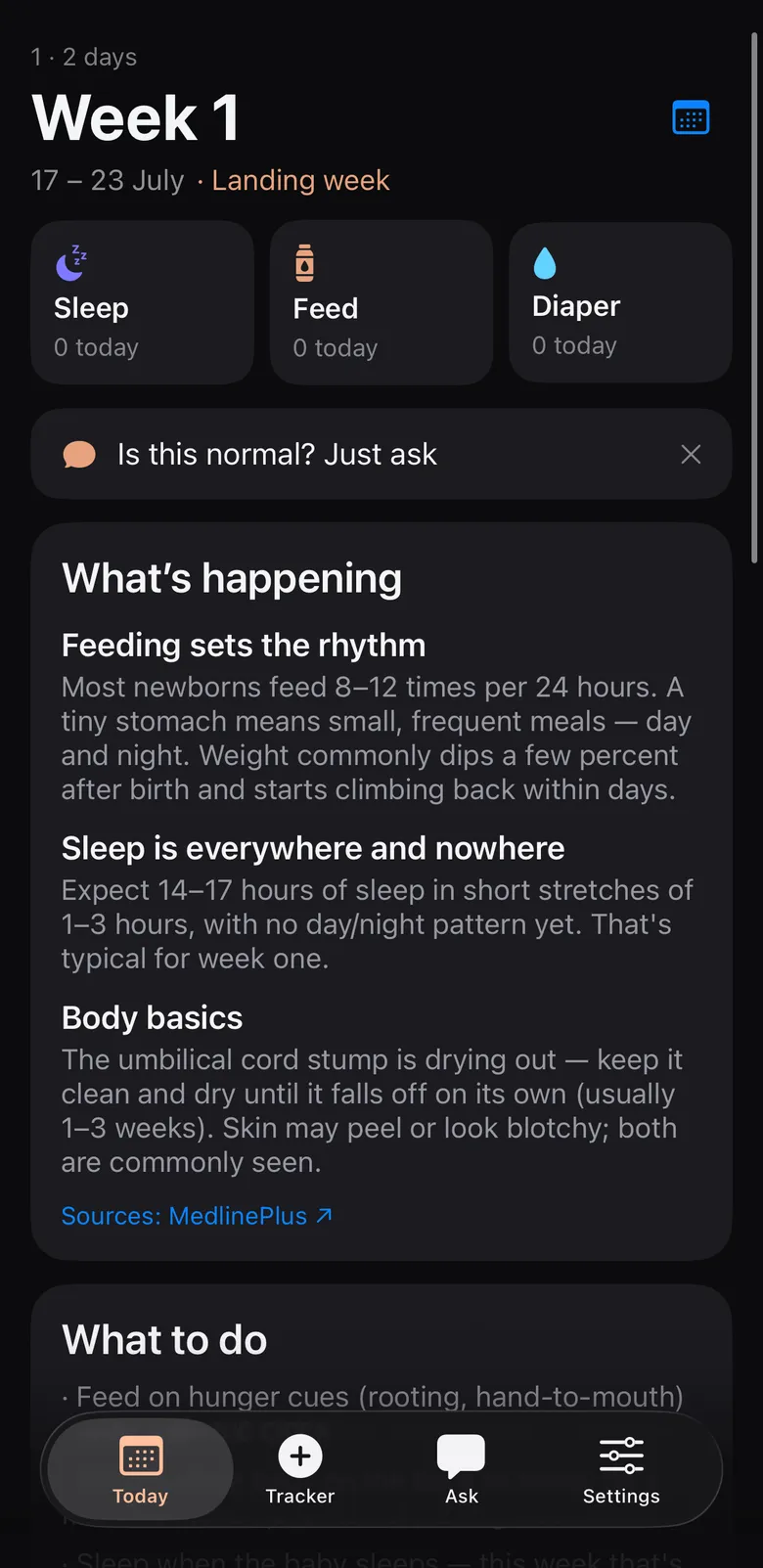
This is exactly what FirstWeeks shows you — matched to your baby
Week 7 guidance, skills to watch, and answers that know your baby’s age and log.