 FirstWeeks
Your baby at 9 weeks: finding a voice
Medically-informed · Sources: CDC · Updated June 2026
More sounds, more smiles, and the first hints of a daily rhythm.
What’s happening
Sound experiments
Squeals, gurgles and longer coo strings — baby is playing with the voice.
A loose pattern forms
Feeds and naps start clumping at similar times. It's a sketch, not a schedule — expect it to wobble.
Stronger tummy time
Head comes up higher and holds longer; some babies start pushing up on forearms.
What to do
- Follow the sketch: aim naps at the sleepy cues, not the clock
- Answer baby's sounds like a conversation — pause, reply, pause
- Move tummy time to a firm floor mat for better practice
When to check in
No cooing or vocal sounds at all, and no social smiling by now — mention it to your pediatrician.
Skills to watch this week
- 9–13Squeals and gurgles — Volume experiments — the voice is a new toy.
- 9–13Steadier head held upright — Less wobble when carried or held sitting.
- 9–13Pushes up on forearms — Mini push-ups raise the chest in tummy time.
- 9–13Briefly holds a toy — Keeps a light rattle in the grip for a few seconds.
- 9–13Bats and swipes at objects — Aims at dangling toys; contact is the victory.
- 5–9Watches you as you move — Eyes follow you across short distances around the room.
Every baby has their own pace — ranges are typical, not deadlines.
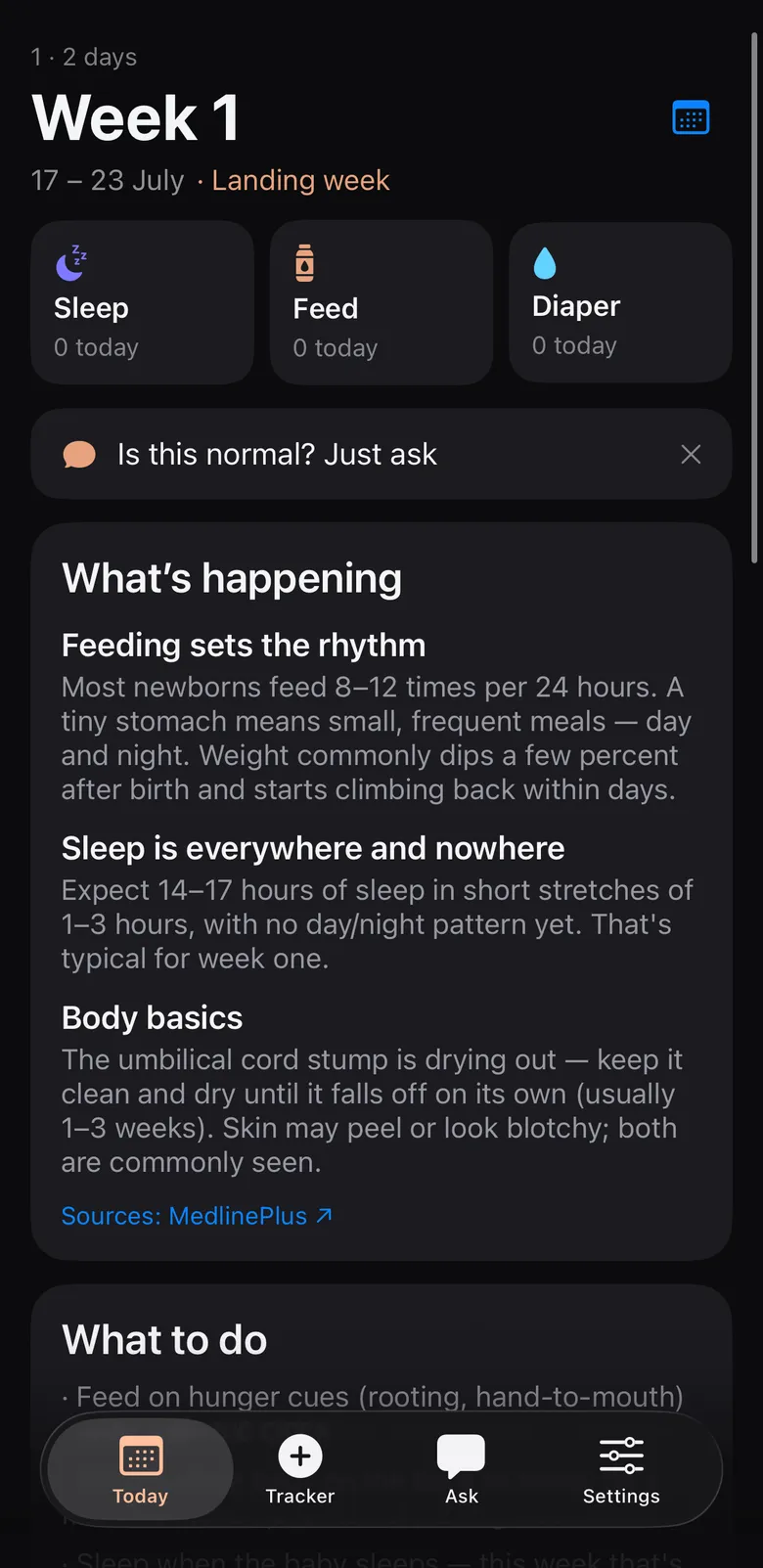
This is exactly what FirstWeeks shows you — matched to your baby
Week 9 guidance, skills to watch, and answers that know your baby’s age and log.