 FirstWeeks
Your baby at 2 weeks: settling in
Medically-informed · Sources: CDC · Updated June 2026
Adaptation week: most of the newborn transition states peak and start to fade by the end of this week.
What’s happening
Jaundice peaks and fades
A yellow tint to skin and eyes is very commonly seen — it usually peaks around days 3–5 and fades by the end of week 2. Frequent feeding helps it pass.
Kidneys switch on
You may briefly see reddish-orange dust in the diaper (urate crystals) in the first days; it typically disappears as feeding volume grows.
Hormone shifts
Mild breast swelling or a little discharge can appear in both boys and girls as maternal hormones leave the body. It's painless, symmetric and temporary.
What to do
- Keep gentle hygiene: warm water is enough for most of the body
- Avoid overheating — light layers, room around 68–72°F
- Note feeds and diapers; the counts answer half of your worries
When to check in
Yellow tint spreading below the knees, deepening after day 5, or paired with poor feeding or unusual sleepiness — call your pediatrician the same day.
Skills to watch this week
- 2–8Studies high-contrast patterns — Bold black-and-white shapes hold attention longest.
- 2–6Makes throaty little sounds — Grunts and sighs — the warm-up band before cooing.
- 1–4Recognizes your voice and smell — Calms or stills to the voice heard from inside for months.
- 1–5Random arm & leg movements — Jerky, uncoordinated waving — the nervous system is wiring up.
- 1–5Calms when held — Settles against a warm chest — contact is regulation at this age.
- 1–5Cries to communicate — Different needs slowly acquire slightly different cries.
Every baby has their own pace — ranges are typical, not deadlines.
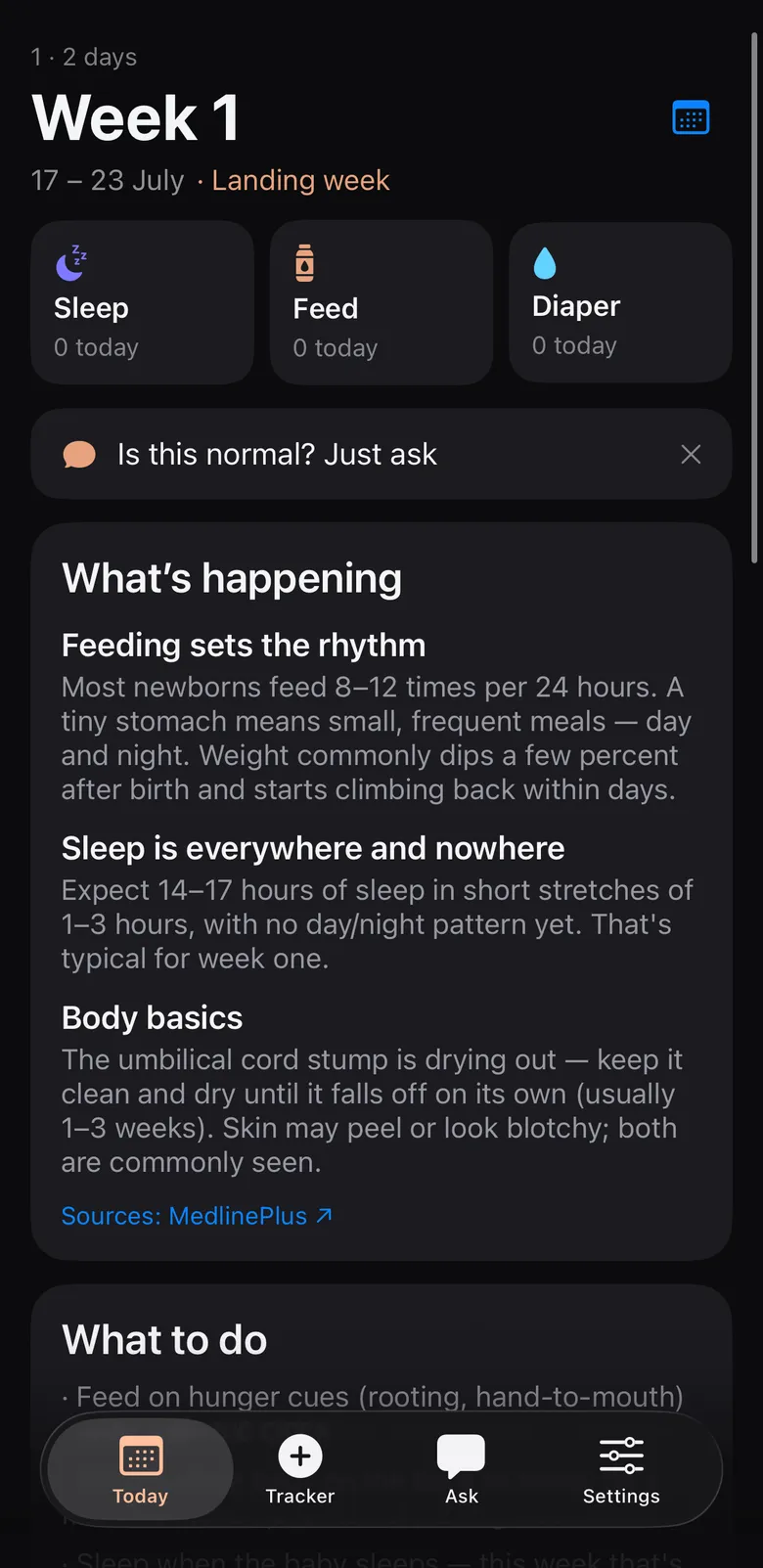
This is exactly what FirstWeeks shows you — matched to your baby
Week 2 guidance, skills to watch, and answers that know your baby’s age and log.